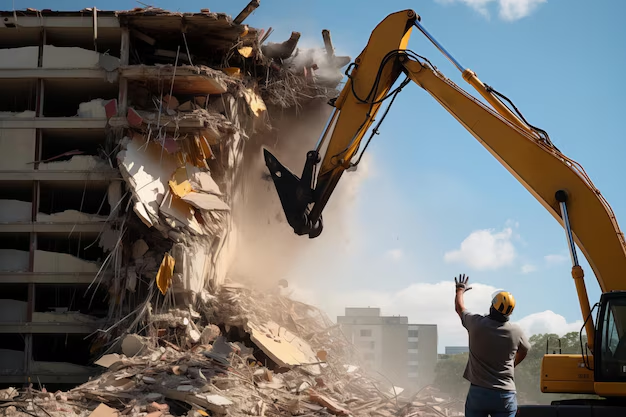
When you’re planning a demolition project, whether it’s interior space clearing, full‑structure removal or site clearance for redevelopment you’re probably focused on getting demolition done safely, quickly and cost‑effectively. But have you considered the hidden value in what you’re taking down? Materials that might have been dismissed as “waste” often contain significant reuse, resale or recycling potential. Understanding this opens opportunities to reduce disposal costs, generate revenue, and enhance sustainability credentials for your project.
In this article we’ll explore:
- Why demolition debris isn’t just worthless rubbish
- What materials typically hold value
- How professional demolition services (such as ours in the GTA) can unlock that value
- Practical steps you can take on your project
- Why this matters for cost, schedule, reputation and the bottom line
Table of Contents
ToggleWhy Debris Has Value (And Why That Matters)
Debris from demolition is commonly perceived as waste destined for landfill. But organisations such as the U.S. Environmental Protection Agency (EPA) point out that a large share of construction & demolition (C&D) materials can be reused or recycled instead of being simply thrown away.
Key reasons this matters:
- Cost savings on disposal & new material purchase: Recycling and reuse reduce landfill tipping fees and reduce the need to buy virgin materials.
- Revenue or value recovery: Some materials (metals, high‑quality wood, architectural salvage) can be sold or donated for tax benefit.
- Sustainability / regulatory benefits: Projects with higher diversion from landfill perform better in green building standards, cause less environmental harm, and reduce raw‑material extraction.
- Marketing & brand benefit: Showing you handle debris responsibly helps position you as a responsible builder or developer, which is increasingly important in the GTA and beyond.
What Materials in Demolition Debris Actually Hold Value
Here are some of the common debris streams in demolition that hold value; either for reuse, resale, or recycling.
Concrete, Brick & Masonry
Crushed concrete, reclaimed brick, stone and masonry can be reused as base aggregate, fill material, road sub‑base or even architectural salvage. The EPA confirms concrete and brick are among the major C&D materials suited for reuse.
For instance, a recent article noted:
“Recycling concrete saves contractors $8‑$12 per ton compared to landfill disposal.”
Metals (Steel, Copper, Aluminum)
Metals are among the highest value materials to salvage. They can be sorted, cleaned and sent to recycling yards for substantial return. Their recycling typically requires less energy than producing virgin metal, which adds value.
High‑Quality Timber, Architectural Elements & Salvageable Materials
Older buildings often contain usable hardwood, architectural fixtures, doors/windows, stonework etc. These can be reclaimed, repurposed, sold or donated. The Institute for Local Self‑Reliance (ILSR) points out that deconstruction (rather than blunt demolition) can recover significant value.
Wood, Drywall, Insulation & Other Secondary Materials
While these may command less resale value, they still hold value via recycling, energy recovery, mulch, soil amendment etc. For example, gypsum from drywall can sometimes be reused as soil amendment.
How We Unlock This Value in Demolition Projects
At TheFixitGuys, when handling demolition in the GTA we adopt a structured approach to maximise value from debris. Here’s our process:
- Pre‐demolition audit & material inventory
Before demo starts we assess materials on‐site: is there salvageable timber, architectural metal, clean brick/masonry, large structural steel, etc. We mark items for salvage, reuse or special recycling. - Selective demolition / deconstruction where viable
For buildings with high‑value salvage potential we apply deconstruction techniques (rather than purely destructive demolition) so that materials remain clean, sorted and usable. This approach may cost slightly more up‑front but often yields net savings or revenue. - On‐site segregation & clean sorting
Materials such as concrete, brick, wood, metals are sorted at source to avoid contamination, which increases their value in recycling streams. Contaminated mixed debris drastically reduces value. - Engagement with recycling yards, salvage markets & reuse networks
We coordinate with local demolition recycling centres, salvage yards and reuse networks (e.g., architectural salvage) to maximise value for materials. - Disposal of irrecoverable waste and documentation
For waste that must go to landfill, we minimise volumes by diverting other materials. We also provide clients with diversion metrics, which supports green building / LEED documentation. - Use of recovered material for onsite or future projects
In some cases we feed recovered aggregate or masonry back into the same site (e.g., as fill or base), reducing the need for new aggregate purchase and cutting time/cost.
Real‑World Benefits & Case Illustrations
-
According to EPA data: in the U.S. in 2018, approximately 455 million tons of C&D materials were directed to next use (recycled/reused) while about 145 million tons were landfilled.
-
A case article noted savings of $600,000 by one waste authority through reuse of demolition materials instead of buying new fill.
While these are U.S. figures, the same logic applies in the Canadian/GTA market: landfill tipping fees, transport costs, raw material prices are rising, making recovery and reuse even more attractive.
Practical Tips for Your Project (GTA Focus)
To leverage this hidden value when you plan demolition in Toronto/GTA, consider the following tips:
- Include salvage/recycling in your scope and budget: Don’t treat debris disposal as a simple line‑item; build in salvage evaluation.
- Ask your demolition contractor about recycling diversion rates: What percentage of materials will they divert?
- Find salvage markets ahead of time: Identify local salvage yards, brick/stone reuse specialists, metal recyclers.
- Separate materials on‑site: Even if time‑pressured, simple segregation (metal pile, brick pile, wood pile) pays off.
- Document your diversion: This supports sustainability credentials, may help with municipal incentives or green building certification.
- Maximise reuse onsite: Where feasible, re‑use crushed concrete or brick as base/subbase for driveways or landscaping.
- Watch for hazards: Salvage and recycling still must comply with asbestos, lead paint and other hazard protocols—skipping these can reduce value or incur liability.
- Communicate value to stakeholders: Share with clients or owners that salvage adds value, not just waste disposal cost.
Why This Matters for Your Investment?
- Reduced overall cost: You’re not just avoiding disposal, you may recover value and reduce new‐material spend.
- Faster project handover: Less waste means less cleanup, less delay for next phase (build/landscape).
- Enhanced sustainability credentials: Useful for ESG reporting, tenant attraction, municipal/regulatory favour.
- Better asset value: Materials reused in the project or sold offset cost and deliver smarter ROI.
- Lower environmental footprint: It’s simply more responsible—and increasingly expected in the Toronto/GTA market.
Conclusion
Don’t simply view demolition debris as a cost centre. When managed wisely, the “waste” from your demolition project can become a value stream — reducing disposal costs, generating material value, elevating your sustainability credentials and improving your bottom‑line.
If you’re planning a demolition project in Toronto or the GTA and want a partner who knows how to unlock the hidden value in debris, contact TheFixitGuys today for a consultation. Let’s turn what you thought was waste into worth.