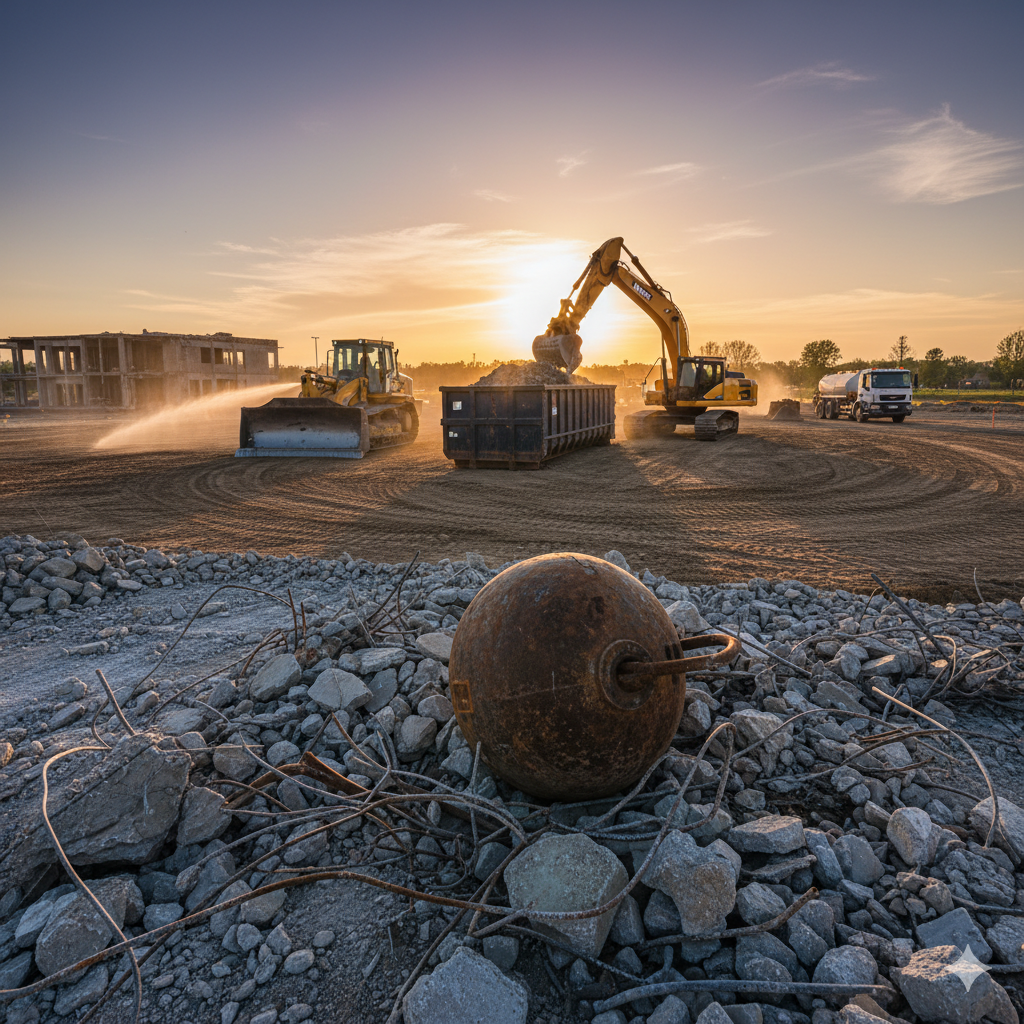
When a building comes down, most people think the job is done. But the truth is demolition is only the beginning of the process, the real work starts after the wrecking ball swings. Once the wrecking ball finishes its work, the site must be cleaned, cleared, leveled, and prepared before anything new can be built.
Whether you’re preparing to build a new home, a garage, a commercial building, or simply want the land cleared and leveled, post-demolition cleanup and grading are essential steps.
This guide explains everything that happens after demolition; in simple language that any homeowner, builder, and property investor can understand.
Table of Contents
ToggleThe First Step After Demolition?
The moment the structure collapses, the demolition team begins a list of important tasks to make the site safe and ready for cleanup. Here are the steps that happen right away:
1. Debris & Material check
Right after the demolition is complete, the crew evaluates all debris on the ground. This includes:
- wood
- concrete
- brick
- metal
- drywall
- shingles
- insulation
- soil and landscaping waste
This helps plan how the site will be cleaned and what needs to be recycled or thrown away.
2. Full Site Safety Inspection
Safety checks are done to confirm the area is safe for workers to enter.
This includes checking for:
- Loose materials
- underground hazards
- damaged utilities
- sharp objects or exposed rebar
- chemical spills
3. Hazardous Material Review
Certain older buildings may contain hazardous materials such as asbestos or lead paint. These materials require special removal and disposal. If any of these are found, they must be handled according to Canadian regulation guidelines for hazardous waste.
4. Equipment Clearing and Reset
Heavy machinery like bulldozers or excavators are repositioned or removed from the immediate work zone to make space for debris sorting and cleanup.
Post-Demolition Site Cleanup: What Actually Happens
Cleanup is one of the most important parts of the process. It prepares the land for grading and makes sure everything left behind is safe and manageable.
Below is a clear breakdown of how cleanup works.
Sorting and Separating All Debris
This step involves separating materials into categories:
- wood
- metal
- roofing
- masonry
- soil
- concrete
- mixed waste
This step is required in most Canadian cities.
Recycling Where Possible
Many demolition materials are recyclable.
Typically recycled:
- metal
- concrete
- asphalt
- bricks
- clean wood
Recycling reduces disposal fees and supports environmental responsibility.
Concrete & Asphalt Removal
Large chunks of concrete are broken using hydraulic tools and loaded into trucks. Recycled concrete is commonly reused for road base, reducing waste.
Dumpster Loading & Removal
Crews load heavy and light debris into dumpsters or trucks.
Includes:
- manual collection
- machine loading
- transportation to licensed disposal sites
This is where most of the visible “cleanup” happens.
Hazardous Waste Disposal
Hazardous materials if found; are sealed and taken to approved facilities. This keeps your property safe and compliant with Ontario laws.
Grading and Land Leveling: Preparing the Ground
Once the debris is gone, the next major step is grading. Grading prepares the land for construction, landscaping, or sale by making the surface level, stable, and safe.
Let’s break down what grading includes.
Soil Removal or Addition
If the soil is too high, too low, or uneven, grading crews will add or remove soil to reach the correct elevation.
Soil Compaction
Compaction makes the land strong enough to support a building. Without proper compaction, construction can fail or shift.
Soil is compacted using:
- rollers
- plate compactors
- heavy machines
This prevents sinking and cracking later.
Drainage Planning
Good drainage protects your future building from water problems. Grading teams shape the land so that water flows away from structures.
This prevents:
- flooding
- erosion
- foundation cracks
Fixing Slopes & Surface Levels
Land may need reshaping if it has dips or bumps. Smoothing the land also prepares it for footings and foundations.
Preparing the Site for the Next Step
After cleanup and grading, your site can move toward the next stage—whether that’s new construction or converting the land for another purpose.
Foundation Preparation
If building a house or structure, foundation prep begins with:
- digging for footings
- marking the building area
- installing rebar
- planning utility connections
Soil Testing
Soil testing checks:
- density
- strength
- contamination
- moisture content
- Ability to support a building
Builders use this information to approve construction. Soil testing is strongly recommended for any new project.
Utility Check and Updates
Utility crews may need to:
- locate underground lines
- install new connections
- remove old pipes or wires
This ensures everything is safe before building.
Permit Requirements
Some projects require updated building permits. You can check Ontario permit details on ontarioca/building-permits-and-plans
Builder or Contractor Handoff
Once the land is cleaned, leveled, and safe, your builder or developer can take over.
How Long Does Post-Demolition Cleanup & Grading Take?
Typical timelines:
- Small residential site: 1–3 days
- Average home or garage: 3–7 days
- Large lot or commercial building: 7–14 days
Factors that influence time:
- weather
- amount of debris
- size of the building
- presence of hazardous waste
- soil condition
FAQs
Q1: Can construction start right after demolition?
Yes, after cleanup, grading, and soil testing are complete.
Q2: Do I need a permit for cleanup or grading?
Usually no, but check local building codes.
Q3: Is recycling mandatory?
Many materials must be recycled by law in Ontario.
Q4: What happens to old concrete?
It is crushed and reused for roads or new construction.
Q5: Can I keep materials from demolition?
Yes, simply inform your contractor before demolition begins.
Q6: Does grading prevent flooding?
Yes, proper grading directs water away from structures.
Conclusion
Demolition is only the first chapter. What happens afterward is cleanup, debris removal, grading, and land preparation; matters just as much for safely starting your next project.
At TheFixitGuys , we specialize in:
- complete post-demolition cleanup
- safe debris removal
- land grading and soil compaction
- site preparation for builders
- environmentally responsible disposal
If you want your land clean, level, safe, and construction-ready, our team is here to help.
Contact us today or explore our demolition/services/:
- Demolition Services
- Debris Removal
- Grading & Site Prep
- Residential & Commercial Demolition