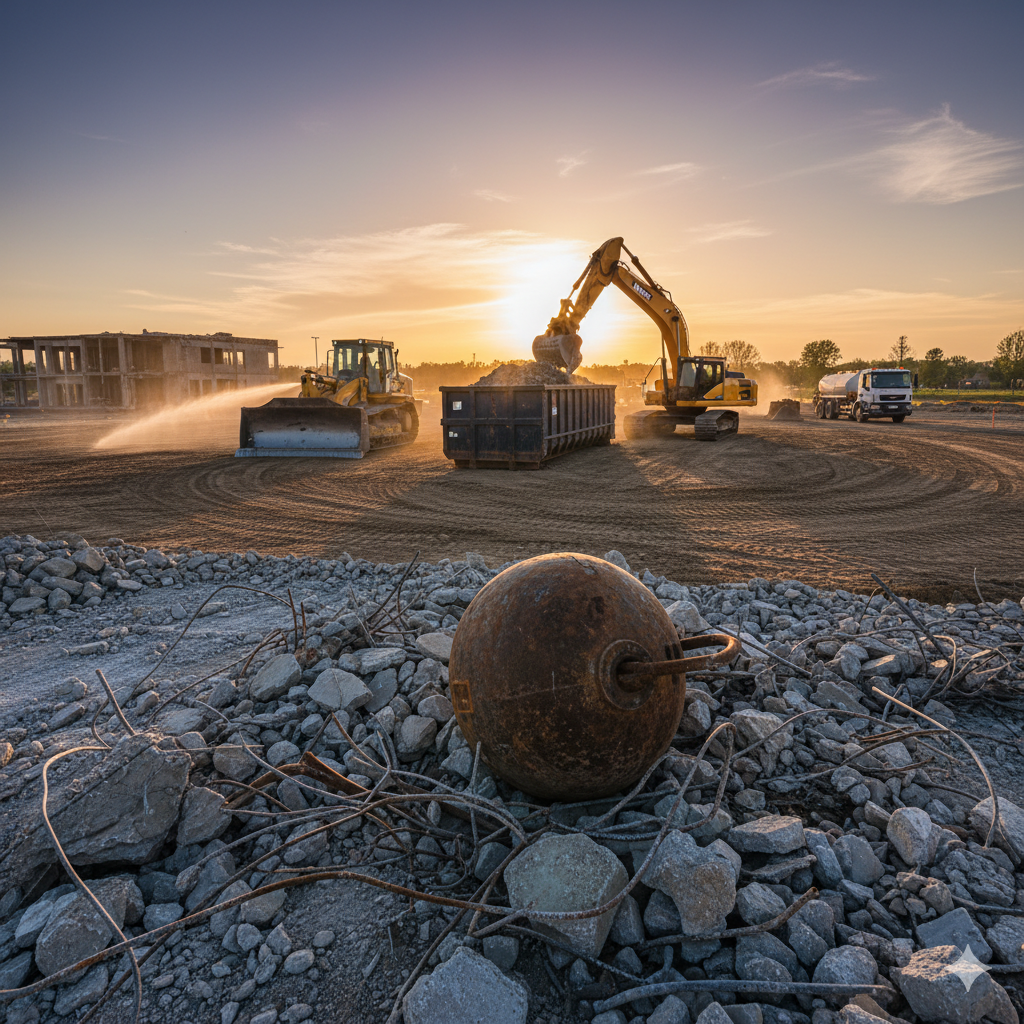
When a concrete structure is demolished — whether it’s a driveway, foundation, sidewalk, or entire building; the result is often a mountain of heavy, bulky rubble. Traditionally, this debris ends up in landfills, incurring disposal fees and transportation costs. But there’s a better way: by crushing and recycling concrete, we can transform demolition waste into valuable new materials, turning liability into opportunity.
Table of Contents
ToggleWhat Is Concrete Recycling and Why It Matters?
Concrete recycling is the process of taking rubble from demolished concrete structures and turning it into reusable construction material rather than sending it to landfill. It has been described as crushed concrete rubble being used for road gravel, landscaping, retaining walls, or even as raw material for new concrete mixes. With construction and demolition (C&D) generating massive amounts of waste globally, recycling concrete helps reduce landfill pressure, conserve natural resources, and cut down on the environmental footprint of new construction.
Step‑By‑Step Concrete Crushing & Recycling Process
Below is a simplified breakdown of how demolition debris becomes recycled material suitable for new use:
- Collection & Transport: Concrete waste from demolition sites is collected and transported to a recycling facility or on‑site processing area. :
- Initial Crushing: Large concrete chunks are fed into crushers (jaw crushers, impact crushers, or portable crusher attachments) which break them down into smaller pieces.
- Removal of Impurities: If the concrete was reinforced, steel rebar or mesh is separated (often via magnets) and removed. Other unwanted debris (wood, plastic, dirt) is also filtered out. }
- Secondary Crushing & Screening/Sorting: The concrete pieces may undergo another pass through crushers to reach target size. Then screening equipment sorts the material by aggregate size (fine, coarse, base‑fill, etc.).
- Output: Recycled Concrete Aggregate (RCA): The final output — crushed, cleaned concrete — is known as RCA, ready for reuse in a variety of construction and landscaping applications.
Benefits of Recycled Concrete Aggregate (RCA)
Economic Advantages
- Lower material costs: RCA is typically less expensive than virgin aggregate because you avoid quarry extraction costs and reduce hauling expenses.
- Reduced disposal fees: By recycling concrete waste rather than sending it to landfill, contractors and homeowners save on hauling and tipping costs.
- Potential additional revenue stream: In some cases, contractors or recycling facilities may resell recycled aggregates — turning demolition waste into profit instead of a cost center.
Environmental & Sustainability Gains
- Reduced landfill waste: Recycling concrete keeps heavy rubble out of landfill sites — helping extend their lifespan and easing waste‑management burdens.
- Conservation of natural resources: Using RCA reduces demand for virgin aggregates (sand, gravel, stone), protecting natural landscapes and minimizing quarrying impacts.
- Lower energy use & carbon footprint: Producing new aggregate requires extraction, processing, and transport — all energy‑intensive. RCA production substantially reduces those demands, cutting embodied CO₂ emissions and supporting greener construction.
Versatility — Recycled Aggregate for Many Uses
RCA can be used in a variety of applications, such as:
- Road bases and sub‑bases (driveways, parking lots, roadbeds).
- Backfill or engineered fill (site stabilization, embankments, landscaping).
- As aggregate in new concrete mixes or paving, depending on quality and processing — though specification limits often apply.
Applications of Recycled Concrete in Construction
Because RCA is versatile and widely usable, it’s already being applied in many construction and infrastructure projects:
- Road and pavement sub‑bases: Recycled concrete has been used successfully in new pavement projects, often as full or partial replacement for virgin aggregate.
- Driveways, parking lots, walkways, and slabs: For non‑structural concrete or base layers, RCA provides a cost‑effective, sustainable option. (As many guidelines show, most recycled aggregate use is in base/sub‑base rather than high‑strength structural concrete.
- Backfill, grading, and landscaping applications: RCA works well as general fill, erosion control material, or drainage layer beneath hardscapes.
- New concrete or pavement mixes (partial replacement): Some projects have used RCA — often replacing only a portion of virgin aggregate — in fresh concrete or asphalt mixes.
Challenges & Quality Considerations When Using RCA
While RCA offers many benefits, there are some important considerations and potential drawbacks — especially if you’re replacing natural aggregates with high ratios of recycled material:
- Variability in strength & durability: Recycled concrete aggregate often contains residual mortar, which can increase porosity and reduce strength. Studies show compressive strength reductions ranging from roughly 2.6% up to 43%, depending on replacement rates and QC.
- Water absorption and workability: RCA may absorb more water than virgin aggregate, which can affect mix design, workability, and durability.
- Regulatory and specification limits: Many building codes or project specs limit use of RCA — especially in structural concrete or where freeze/thaw durability is critical.
- Need for proper processing and quality control: Effective separation, crushing, cleaning, and screening are critical to producing RCA that meets performance standards — otherwise, the material may underperform or cause issues.
Why TheFixItGuys Recommend Concrete Crushing & Recycling
At TheFixItGuys, we’re committed to sustainable demolition — and concrete recycling is a key part of that commitment. Here’s how we bring value to our clients:
- Full‑service demolition with recycling-first approach: We don’t just tear out concrete — we collect, crush, and process it to produce usable material, minimizing waste and disposal costs.
- Cost savings for clients: By reusing recycled concrete aggregate for backfill, base layers, driveways, or landscaping, we help reduce costs compared to buying and hauling virgin aggregate.
- Environmental and community benefits: Recycling concrete reduces strain on local landfills, conserves natural resources, and lowers the carbon footprint associated with new materials — a win for both clients and communities. :
- Flexible use of RCA: We advise clients on when RCA is appropriate (driveways, base/sub-base, landscaping) and when virgin material might still be better (structural pours, high‑spec concrete, freeze/thaw zones). Quality and suitability are always top priorities.
Conclusion: Building Greener, Smarter With Concrete Recycling
Concrete crushing and recycling is more than just “waste disposal” — it’s a smart, sustainable strategy that turns old demolition debris into valuable, reusable materials. For contractors, homeowners, and developers alike, it offers cost savings, environmental benefits, and flexibility.
As we continue building and rebuilding, embracing recycled concrete not only keeps trash out of landfills — it gives demolition waste a second life, while supporting greener, more efficient construction practices.
If you’re planning a demolition project and want to explore concrete recycling — or want a quote including crushing + recycling services — drop us a line at TheFixItGuys today.